

The sustainability of a daily practice: try taking a nap
Today, my yoga practice consisted of napping, mostly.
I got to the studio at a normal time to begin my practice – I was a bit more tired than I usually am. The weekend had been busy and extremely hot, over 40c both days, and I’d had a hectic week at work. I wasn’t very well rested, had probably overindulged re junk food, and had woken several times in the night which made me a bit crabby. None of which I was really aware of at all.
Anyway, it’s time to plop my mat down. Holy Jesus it is HOT. Still extremely humid in the studio after the supposed “cool change” arrived last night – a drop in temperature but not significant enough to alleviate the built-up tension. It’s relatively easy to enter the vinyasa state of linked breath and movement which I am accustomed to. It is dim, the other students are practicing around me – everyone is in the same boat. It’s Monday morning. I know my routine without having to think. I connect with the breath. Up-dog and down-dog – inhale and exhale.
My sun salutations are feeling harder than they usually do. I know this, because I do them every day around the same time. The repetitive nature of this practice means that you get to notice the subtle differences in your mind and body. This time, I feel stiff, sore, heavy and I’m lacking in my usual enthusiasm. After a few frustrating attempts at some asana which I can usually accomplish, I decide to face the truth. I’m just not feeling it today. When this happens, it is not easy for anyone. Especially when talking about something you usually enjoy – “your passion” or something you find creative fulfillment in. Personally, I find it hard not to become angry at my body when this happens. I get very frustrated and I begin searching for reasons or excuses as to why things are different. Of course, part of the acceptance that comes with having a yoga practice is that it doesn’t really matter why. It just is.
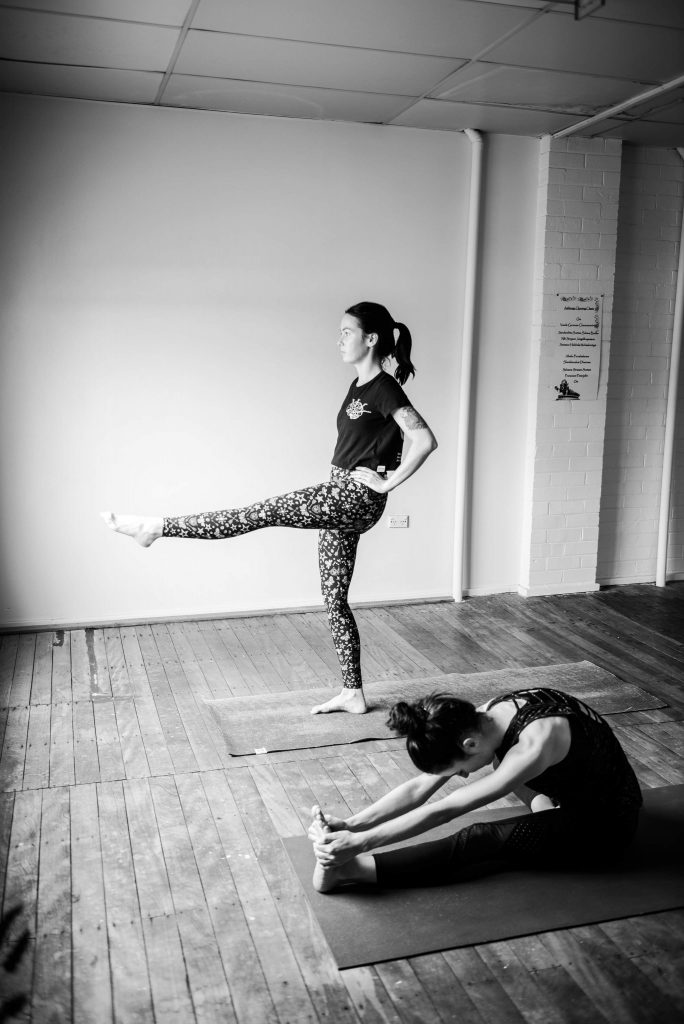
But if you know you can do something and your body inexplicably “fails” to do it when given the instruction, it’s off-putting and prompts lots of internal story-making. In my case, after a slight outburst of emotion at the third failure to complete Utthita Hasta Padangusthasana (not the easiest pose at the best of times) my teacher comes to offer guidance in the form of a smile, a laugh and a reminder to lighten up.
I agree begrudgingly as I realise that this is my chance to modify my practice. This is actually why I am doing this type of class. It’s self-paced. That doesn’t mean you force yourself to perform to the same standard each time – it means you modify the standard to suit how you feel. In this current instance, I feel like I need to take it slow and have a more restful practice than the one I am currently trying to force! I continue my sequence of asana and begin to focus more on my breath than the completeness of the asana. I back off with the pace. I skip poses. I spend more time in restorative forward folds. I still complete around 60% of my usual practice before deciding that it’s time for a rest.
As I lie down and close my eyes for savasana, the other students around me continue their practices at various paces and levels. They are not focusing on me, but on their own practices. In an open session, the students hold space for each other – we are a quietly encouraging community, not an intrusive or nosey one. I know that nobody will judge me or say anything about my practice. In fact, I doubt they have even noticed that I am having an “off day” – we all have them, and we all know that sometimes it’s more than enough effort to make it to the studio.
What kind or level of practice you are doing, doesn’t matter: it just matters that you do it to whatever level gives you joy. Doing your practice out of a sense of competition or guilt is possibly the quickest way to poison yourself against it. When I notice that I am competing with myself or with others, I try to remember why I come to practice in the first place – I am reminded how little true yoga has to do with any form of competition. Competition is antithetical to the purpose of yoga. Competition is without nuance or mercy. It is without love or compassion. When I consciously let go of self-competition, I can recapture that sense of devotion and joy that I always experience in my asana practice.
Nobody can always give 100%. It’s not possible, or advisable, I have learned. You open yourself up to injury, burnout, or turning something you enjoy into a chore. Humans aren’t machines – a lot happens in our bodies, hearts and minds. We are organic beings who grow and change, we are driven by cycles and rhythms. Our approach to spiritual, physical and creative practices should match this nature rather than fighting against it.
It is this aspect which makes our practice sustainable. If you feel like doing a lighter practice, follow that desire. If you want to go all out – enjoy that too! When your body changes as you age, or through sickness and injury, you can rely on your practice to not become out of reach – because you haven’t set some impossible benchmark. This will allow you to sustain a joyful level of practice throughout your entire life. If we don’t allow the wave of that effort to fluctuate naturally in line with our rhythms, we won’t be able to keep it up as we grow and change.
A calm and lightly held consistency of effort allows for more joy. This is the chief advantage of this style of self-paced open session. If I was going to led classes instead, I wouldn’t have time for a lot of self-reflection in my practice, let alone be able to stop mid-sequence to lie down and close my eyes. In Mysore-style yoga class, it is possible to adapt your practice in a new way every time you unroll your mat. You can learn to give yourself what you actually need on a practical level every day, without a sense of obligation or guilt or competition. It is possible to even get better at doing it. I know I certainly have.
Disclaimer: I may or may not have woken myself up with a particularly loud snore.

Leave a Reply
You must be logged in to post a comment.