

Neuroscience, Mysore-style yoga and the dream state
In Neuroscience, there is a theory about the way the brain switches modes. One network of neurons and connections is called the default mode network. This what switches on in our brains when we are doing “nothing in particular” including daydreaming, fantasising or relaxing.
Conversely, the “judgement network” is the part of the brain which activates when you have specific tasks to perform or you’re focused on doing something. Scientists think that our creative ideas are formed by the default mode network, rather than the judgement network. This is why Archimedes was relaxing having a bath when he got his famous Eureka moment. The judgement network’s job is to accept or reject propositions – when this gets over active, such as in high pressure situations or due to over-use, we may experience a stagnation in creativity. Identifying different “modes of mind” has been done for thousands of years through meditation and self-inquiry.
The rishis in ancient India identified 4 states of consciousness.
- The waking state – Jagaritasthana (outwardly cognitive)
- The dreaming state – Svapnasthana (inwardly cognitive)
- Deepest sleeping state – Susuptasthana (unified state consisting of bliss)
- The fourth state – Turiya – a superconconsious state which defies description and is none of these (unmeasurable). It is the state between all of these. There is no thought, or identification with the ego in this state.
The times when we experience the third state, the state of dreaming, are not limited to when we sleep. We also dream when we are awake. We have all experience the state of being “off with the fairies” or in dreamland. This is the same state often accessed while sleeping. You may notice that your mind is infinitely more creative when you are asleep and dreaming than when you are in your normal mind, “trying to think of ideas”.
If we know that it is possible to accidentally slip into periods of daydreaming when we are awake, and that this state is infinitely more creative and useful than we give it credit for, then the question becomes – how do we access this state of being with more purpose and control and frequency?
Think about how you feel when you first wake up in the morning, and you have been accessing the dream state while asleep. It may happen on occasion, that you experience the waking reality as if you are “half in a dream” or still in the dream state while operating in the physical world. The same thing can happen if you are daydreaming and someone interrupts you. It is these moments which we can practice extending.
You will find, if you practice noticing these moments, that they may happen often. You can try and notice how you feel when you are in this state. Probably relaxed, calm, gently curious. You may not speak much; your movements and breathing are probably slow and measured. The environment around you will probably influence how long you can stay in this state without “jolting” out of it by a forced interaction or events unfolding around you. You’ll find that it’s much easier to stay in this state if you do not have to speak, if your interactions with others are minimal, and if you are in a dimly lit room, or semi-darkness. You will also find it easier if you are drowsy from first waking up from the dream state in the first place, or you are a little tired from your day. If the environment is quiet, it is much easier to stay in the state than if people are yelling or talking loudly. If you can be “on your own” when you are in this state, you can find yourself staying in relatively easily.
Actually, what I am describing here is what you tend to find around the world in a Mysore-style yoga class.
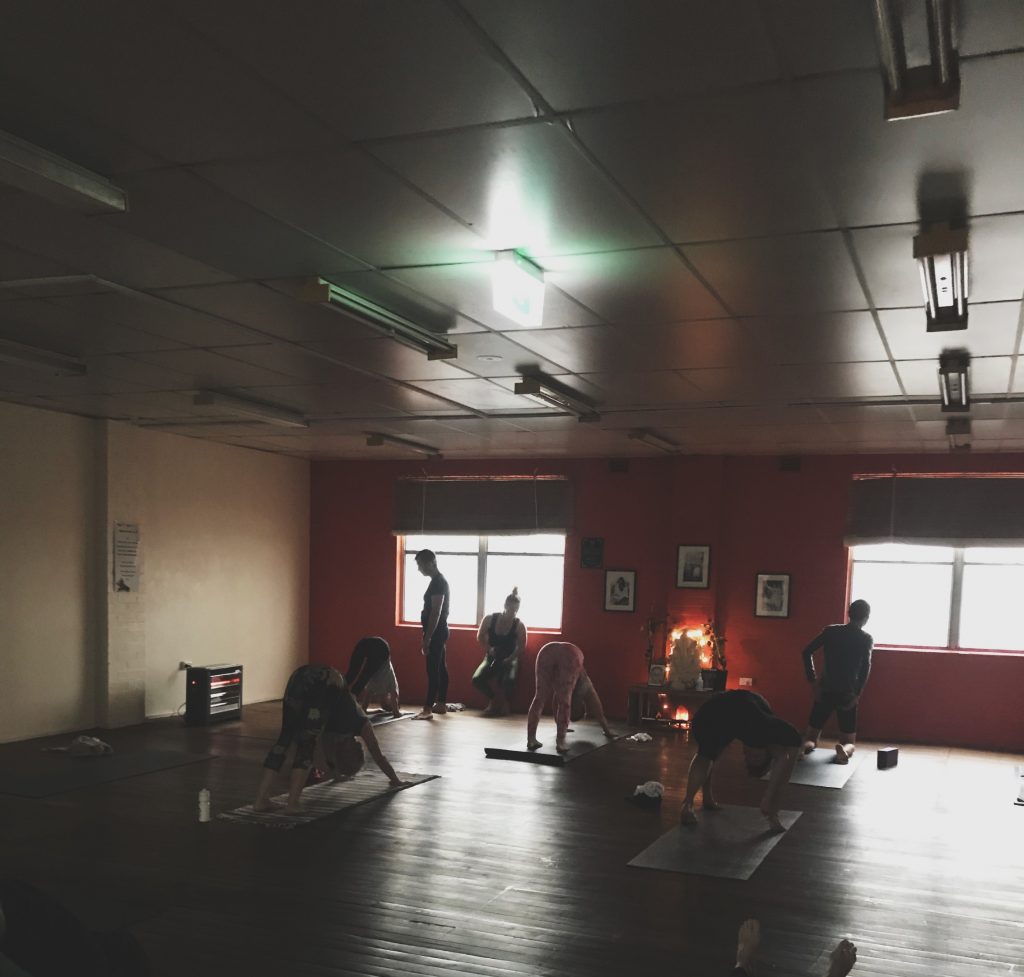
Usually class begins before dawn, is practiced in dim light, with minimal talking from the students and teachers. Most instruction is non-verbal or delivered quietly and minimally. You are given space to continue the practice you have been taught at your own pace. The environment is low pressure, and arrival and leaving times are up to the student. When you are taught in this environment, you gradually learn a set sequence of movements that are performed in the same order each time you practice. This takes away the sense of high pressure or unpredictability which would normally make operating in a dream state very difficult.
In a Mysore-style yoga class, we can practice accessing the dream state and extending it – operating in the default mode. When I wake up, the first thing I do is go to Mysore class. If I am lucky, I can make my way from home to the studio relatively quickly, and there need be no interruption to the dream state. Even if there is an interruption due to getting there, I find that the energy of the environment is so invitingly calm that it is almost like slipping back under the covers again.
But how are you supposed to do yoga while dreaming?!? One part of the answer is to not to try so dang hard all the time. The other part is that because in Mysore-style yoga, we practice the same sequence of postures every day, eventually learning it off by heart – you’re doing the next posture without thinking about it. The environment is ideal for dreaming – quiet, dim, and probably in the early morning with minimal interruptions from others. In fact, most of the time, you can practice with your eyes half-closed or downcast. I find that I am sometimes able to complete my entire 90-minute practice without leaving the dream state of svapnasthana. On days when I achieve this, my day is happier, calmer and more productive. I feel centered. I can be more passionate and creative in my work – probably because I have spent so much time with the default network in operation.
My teacher likes to say, that there is no need to go 100% or 120% in asana practice. It’s a place where we can NOT do that. But this doesn’t mean not trying or being lazy. It’s a way of saying: you don’t need to try so DAMN HARD all the time. Logically, that would be when the judgement network of your brain comes back online. Your foot isn’t aligned correctly. Activate your glute. Stretch harder! Breathe harder! When the judgement network is active in our brain, the default mode network is off. That’s how they work.
The judgement network is needed in our lives. It helps us perform our tasks and our work correctly and diligently. But it doesn’t need to be activated when we are enjoying ourselves or being creative because that’s how we end up with “writer’s block” or feeling burned out – the judgement network should not be switched on all the time! It should be used more as a fine tool than constant state of operation. By constant operation within this mode, we risk increasing our overall sense of anxiety about the world or inducing low self-esteem.
Characteristically, the default mode network is a place where we are relaxed and open. If we create more opportunities to operate in this mode, and practicing accessing it at will, this can have a myriad of benefits for our mental and physical health. It also has a real impact in how we operate in the “real world” – on our productivity and creativity in our work.
Mysore-style yoga classes present a better opportunity to explore these other states of consciousness and access our natural creativity.

Leave a Reply
You must be logged in to post a comment.