

On home practice: The advantages of Mysore-style yoga
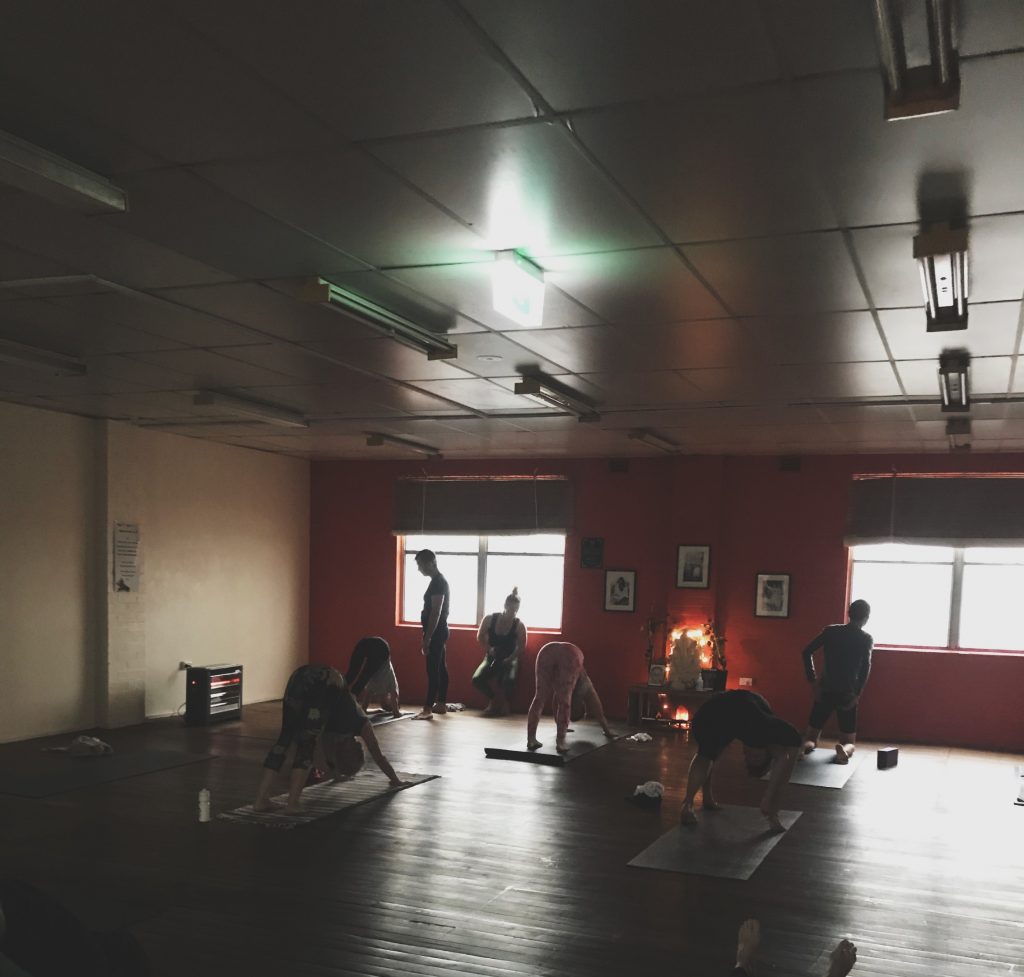
With the world facing a global pandemic, yoga studios internationally have had to close and still find ways to keep their communities connected. It is hard to describe the collective energy of a group of students practicing together. It helps to know that the people you practice with are struggling too, or that they have made it through the difficulties you currently face. It bolsters your confidence and your faith in yourself, and creates a sense of community, which I was really starting to miss after even a few days when the studios had to close.
In the Ashtanga Mysore-style context, because the sequence of movements doesn’t change, you really have an advantage when it comes to keeping your practice going in weird times. There are two main reasons you would practice in a studio at all: community energy helps keep you motivated and supported, and personalised instruction and modification from your teacher. These things are really valuable, and the second is essential to progression in terms of asana if that is what you’re after. But once you have mostly memorised your sequence, you can do it anywhere – travelling and at home.
I feel really lucky that I have this established practice, which feels as solid as the earth. Because I don’t rely on my teacher to tell me the next posture, and I don’t have to learn a whole variety of different postures and transitions to try and keep my practice going solo, I am free to experience the minute differences in the body and mind each day, and watch the positive progression of both. The best thing about practicing Mysore-style is that you are empowered by knowing that you will always have the ability to practice, wherever you are, whatever state you are in. You are not reliant on anything external to yourself.
In many ways, it feels like learning Mysore-style yoga has actively prepared me for this situation. It has prepared me for times when there is no physical support or motivation to draw on, like attending a studio. It has taught me to harness my own motivation for practice, and to let that motivation grow and be propelled from within. If I was just attending led vinyasa classes, I would probably not be doing much yoga right now. But I’m practicing 6 days a week, like I have for a long time now.
There are still challenges with practicing at home or solo. You can get lazy without the other students and teacher there. When I was travelling, I would still practice every morning but often, I wouldn’t do the full sequence, or, I would stop challenging myself in certain postures. Also the ability to become distracted outside of a studio environment is pretty real. Even at home I’ll notice some fixture that needs adjusting or something that needs to be put away and “oh hang on just before I forget again, I’ll get that”, etc etc. In the privacy of your own home, you can check your phone during your practice and nobody will *tsk tsk* at you for it! This is usually not a good thing.
So, what is the middle ground? With my studio, we have been holding Zoom classes. I was worried it wouldn’t work very well at first, but it’s turned out heaps better than expected. My teacher can see all the students at once, and give them individual instruction – we all can see familiar faces on the screen and know that we are all in it together, just like before. There is that sense of support and understanding that comes with community, even though we are physically far from each other. I was always skeptical about the idea of online classes – pre recorded videos – because of the lack of real-time feedback from the teacher, and always thought that I would never have enough motivation to stick with something if that is the only way I was learning it. This method of live-streaming classes side steps most of the issues with “online yoga” as I see it, and reconnects us with the community energy once more.
Incredibly, we have access to the kinds of technology which can keep us connected across time and space barriers which would have been unthinkable for most of human history. As students and teachers, we have a responsibility to encourage each other and practice together through this. The practice keeps our minds and bodies strong, healthy and vibrant. It helps us raise our aspirations to something higher than “ordinary existence”, and it can never be taken away.

Leave a Reply
You must be logged in to post a comment.